Coated seeds need to come into contact with the mineral soil - that’s how you get ideal germination. So, for direct sowing to be successful and for seeds to fully grow, it’s crucial that those conditions exist and the seeds root directly into the soil. Soil preparation is recommended in areas with dense litter cover, moss growth, impermeable accompanying vegetation or a pronounced layer of raw humus. Areas affected by recent forest fires or landslides would not need the preparation, as would recent clear-cuts, which have exposed and fertile soil.
Objectives and principles
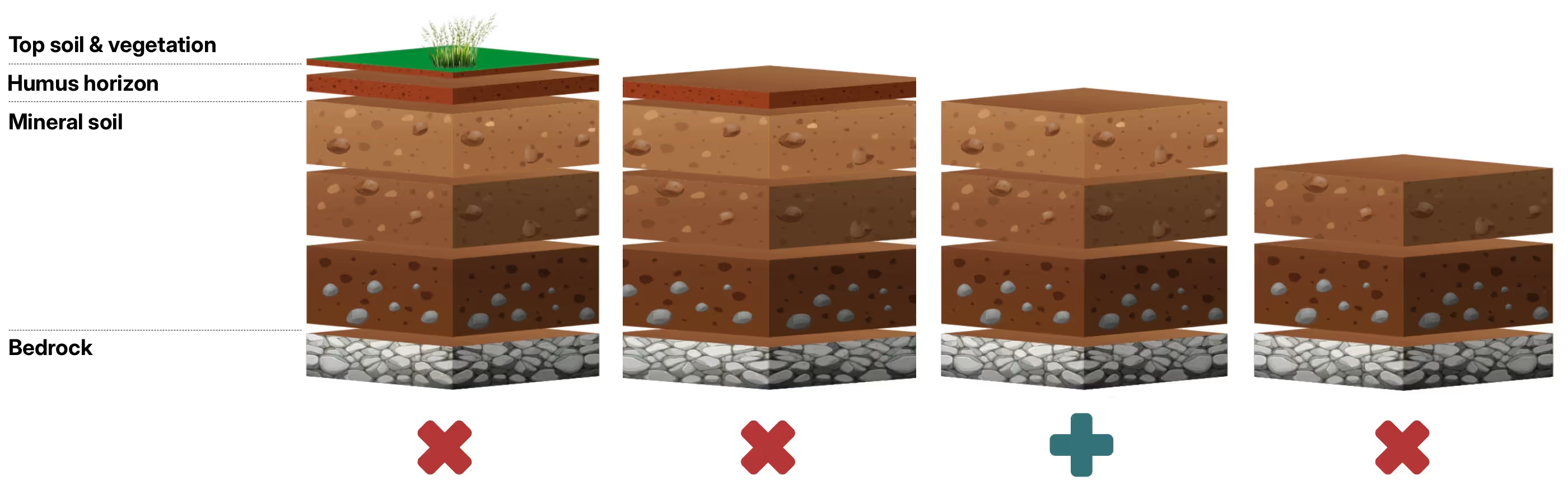
1. Limit soil disturbance
The main objective in preparing for seeding is to expose the mineral soil. At the same time, you want to avoid disturbing the ground too deeply, which could cause erosion and nutrient leaching. It’s best to leave some humus and not overwork the soil.
2. Always work across the slope
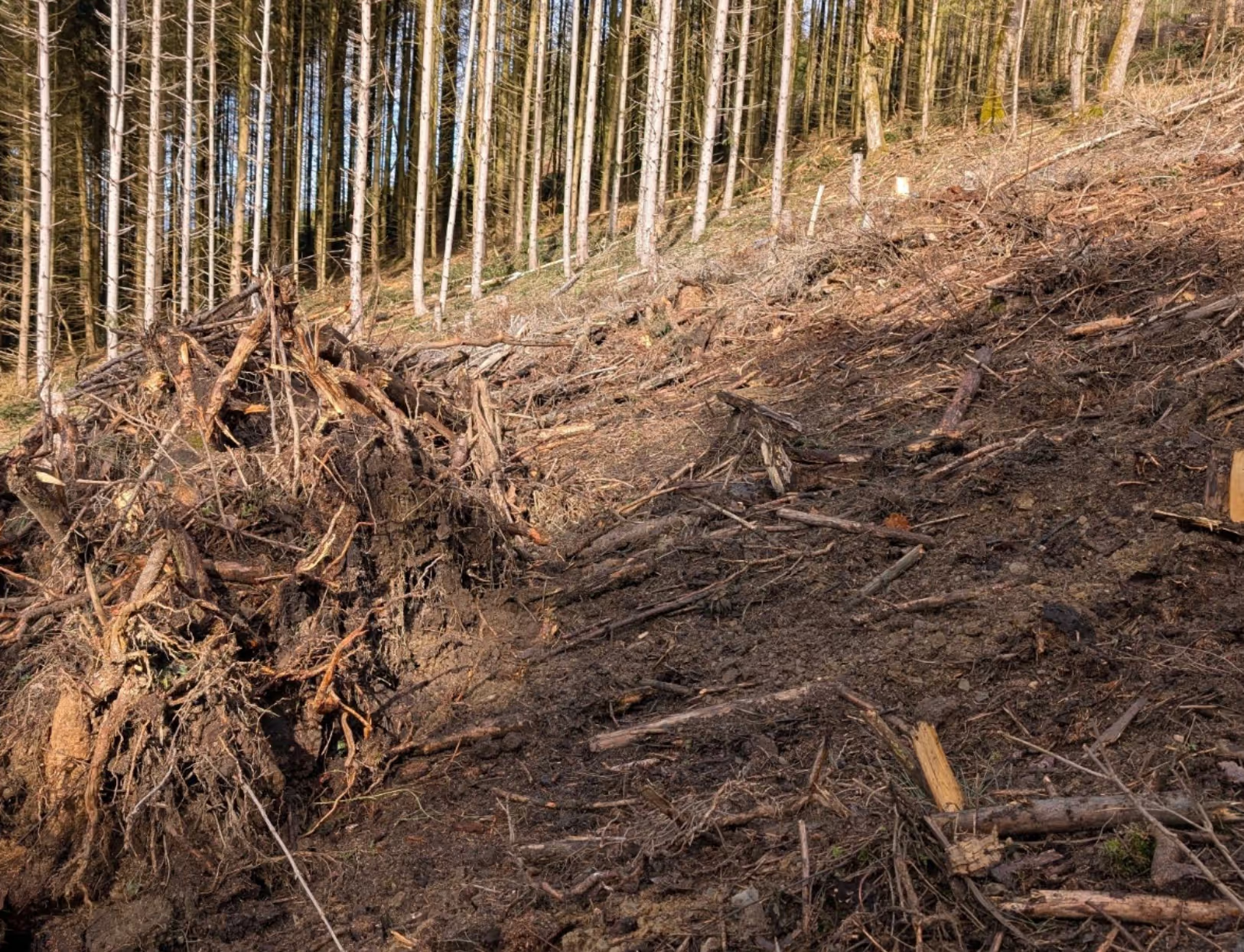
On slopes, it is particularly important to work across the slope to prevent water runoff and associated erosion. The logging debris should be piled up across the slope in the form of embankments. These serve as erosion protection, windbreaks and moisture reservoirs.
3. Minimize soil compaction
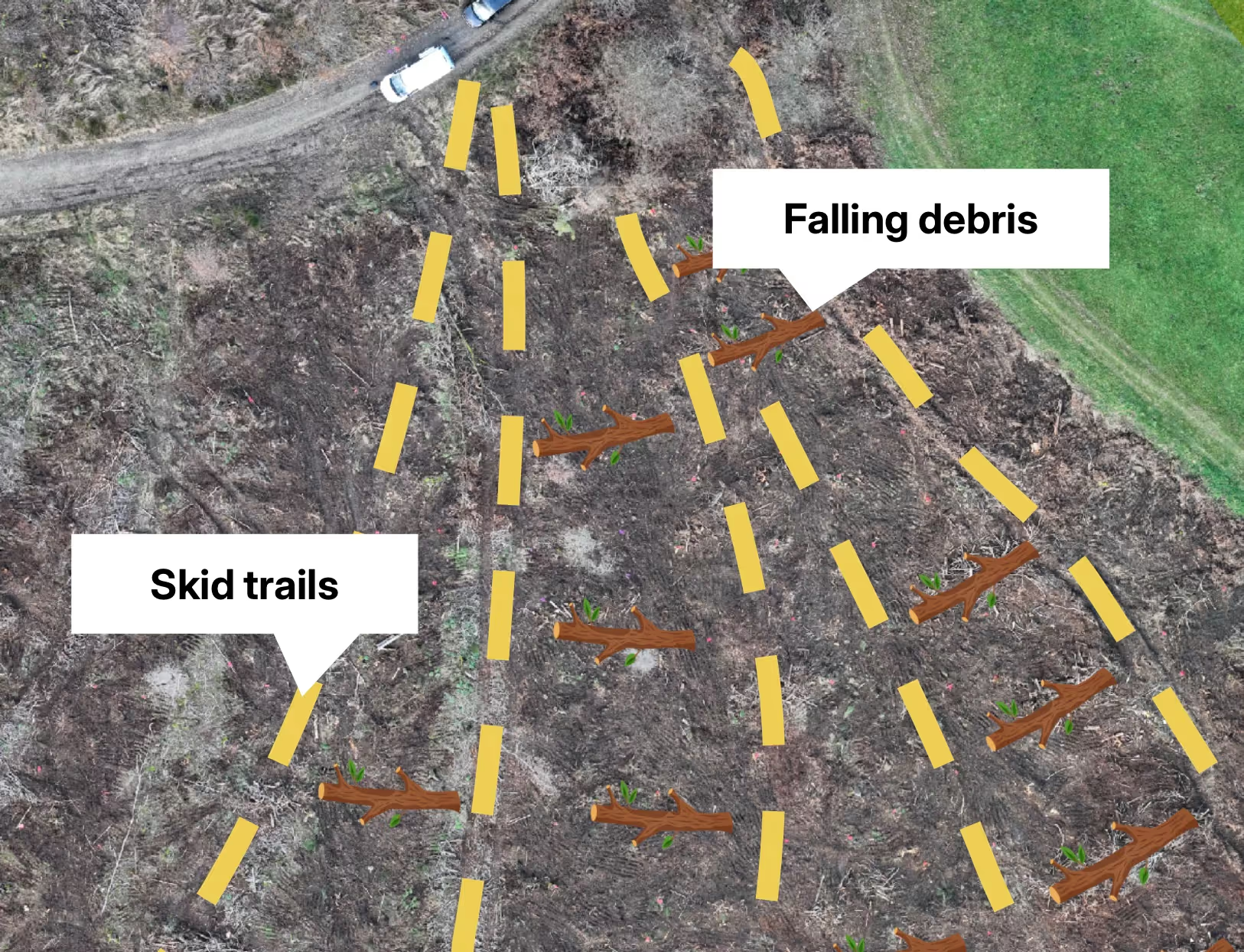
Lastly, it is advisable not to drive over the entire area when preparing the soil - this will compact it. It’s best to carry out soil work from the skid trail or with light equipment. Using forestry Caterpillars opens up the soil and sows the seeds in a single operation. The pressure on the soil from the Caterpillar is comparable to that of a skidding horse.
Practical methods and use of machinery
Soil scarification can be carried out over a large area, in strips, or selectively, depending on the silvicultural objectives and site conditions. As a rule, it is advisable to prepare the soil only in strips, or selectively, This helps avoid further erosion, heat and wind exposure, which dries out or removes topsoil.
1. Excavator or forwarder with clearing rake
Well suited for extensive or strip-wise preparation. They are very effective on complex terrain where they can work with high precision.
2. Forest plow (TTS device)
Efficient on larger, easily accessible areas. It can pull wide furrows, which is particularly useful for sowing in rows.
3. Strip tiller
Suitable for selective or strip-wise cultivation. This removes competing vegetation and creates narrow seed strips.
4. Planks
Suitable when the grapple of forwarders, used to excavate the topsoil or humus layers, exposes the mineral soil. It helps avoid creating a depression that would collect rainwater.
Ecologically sound scheduling
For organizational and ecological reasons, soil preparation should ideally be completed several weeks before sowing. It can either be carried out during timber harvesting or skidding, or just afterwards.
When carrying out this work, it is important to consider the following aspects:
1. Protection of existing stock
Naturally regenerated forest trees should be left in place wherever possible.
2. Removal of competing vegetation
Broom, ferns, blackberries, grasses and other herbaceous vegetation should be removed to give the young plants a head start.
Conclusion
Careful soil preparation is key to the successful direct seeding of a forest. The most important factor is the contact between the seed and the mineral soil, combined with minimal disturbance, appropriate technology and ecological considerations.
This type of work prevents erosion, creates ideal germination conditions and promotes stable forest structures from the outset.
Sources & further information
Gasparini, I. (2020): Direct seeding in forests. State of knowledge. Forest and Wood, pp. 17-19.
Brunotte, J. (2010): Conservative tillage as a contribution to reducing soil compaction, soil erosion, runoff and mycotoxin formation in cereals. Literature review, Thünen Institute.