The challenges of climate change are putting our forests to the test. Storms, drought and pest infestations are causing problems for traditional reforestation methods. German forestry experts are increasingly turning their attention to a traditional but proven method: direct seeding.
This method offers three major advantages, which have been scientifically researched and proven by the Bavarian State Institute for Forestry and Forest Management (LWF).
1. Superior root development for long-term stability
The stability of our forests begins deep in the soil. The roots of planted trees are often so severely deformed or pruned that they do not grow deep enough even after decades. Direct seeding, on the other hand, goes right to the radicle’s development. From the outset, this part of the plant embryo that develops into the primary root is left undisturbed in its natural growth trajectory. This growth is even further stimulated during periods of drought.
As a result, the roots quickly reach water and nutrients in deeper regions and the trees that are grown from seed become much more resistant to drought and windthrow. Due to the ideal root-shoot ratio and the associated low transpiration, survival rates are also much higher than for planted trees.
According to the LWF, 71% of planted trees show pronounced, severe or extreme root deformation.
For trees that grow locally from seed, the figure is only 21%.
Severity of deformation in the main root
Not deformed
Slightly deformed
Pronounced
Severe
Extreme
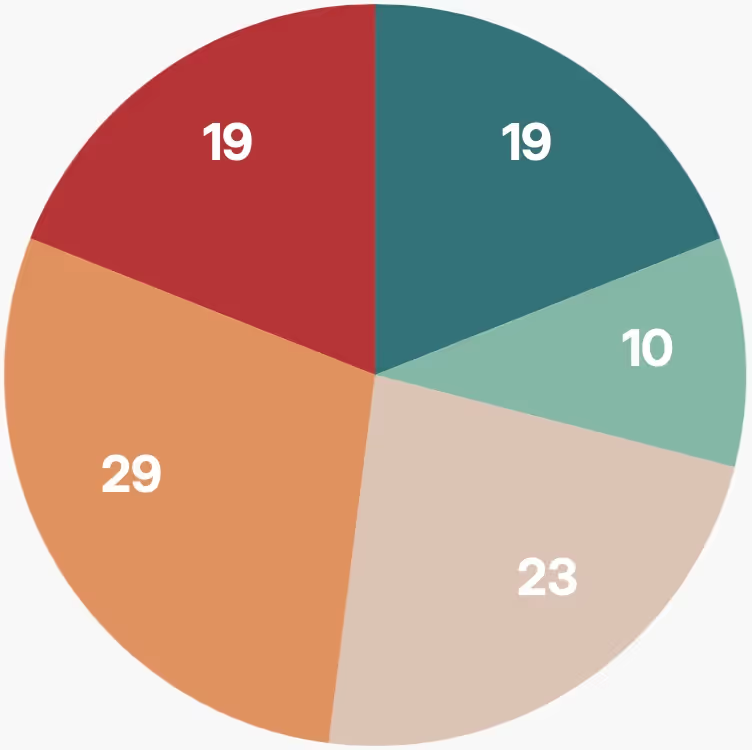
Planting
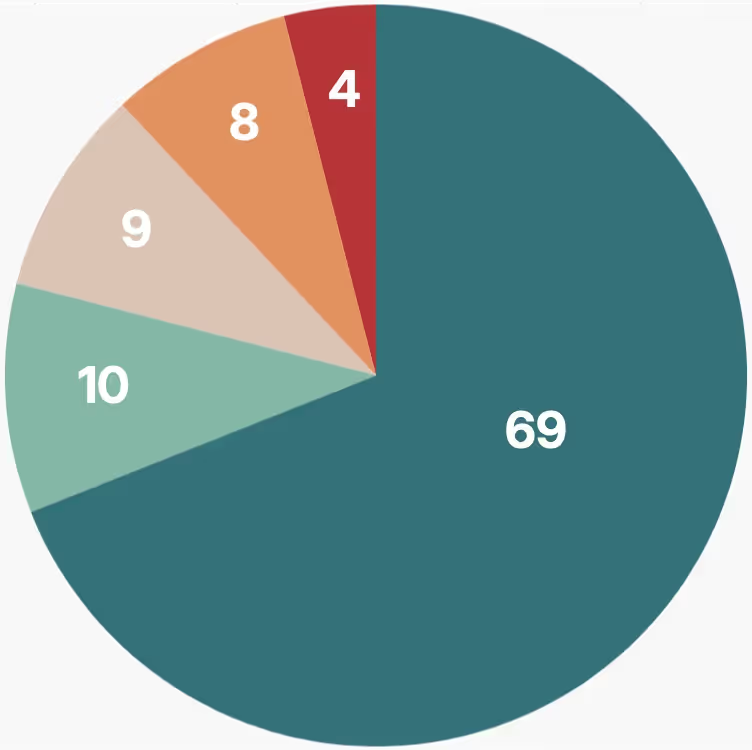
Natural regeneration/seeding
Comparison of root development
Although the seedling on the left is already several years old, the younger seedling from direct seeding shows significantly deeper root growth.
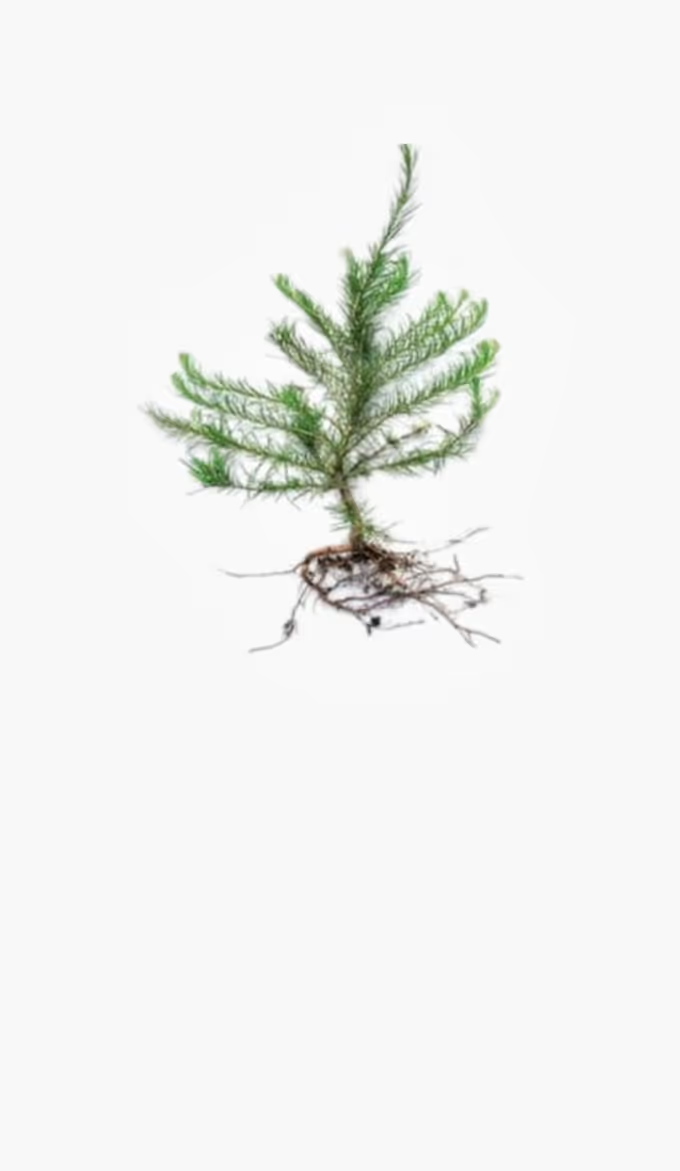
Planting
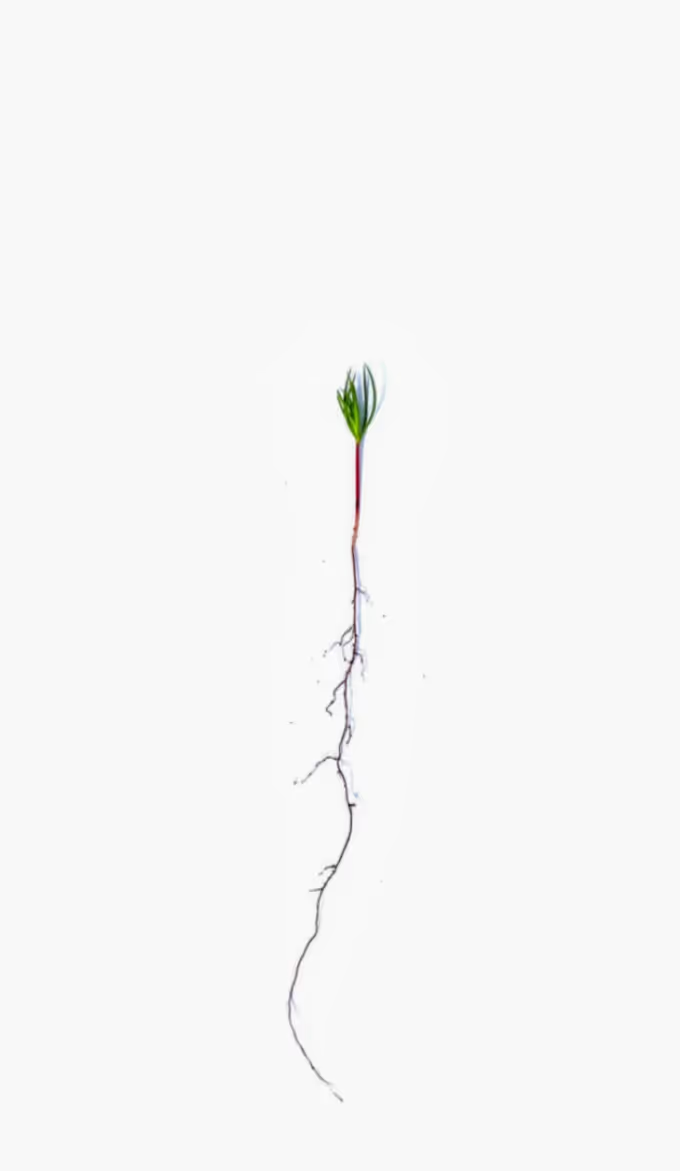
Natural regeneration/seeding
2. No transplant shock and a better survival rate
Plants brought into the forest from nurseries often suffer from transplant shock. This stress, caused by digging, transporting, temporary storage and planting, can jeopardize the survival of seedlings.
Studies by the LWF show that planted seedlings can have a failure rate of up to 30% or more in stressful situations such as summer drought.
Directly sown plants, on the other hand, adapt from the outset to the natural conditions of their location. This makes them more resilient and gives them a higher survival rate.
3. Greater genetic diversity and resilience
Direct seeding promotes genetic diversity. This is crucial to the forests’ abilities to adapt to changing environmental conditions.A naturally seeded forest produces several thousand seeds per hectare. The fact that some seeds lie dormant—sometimes for several years—creates a structural diversity right from the start.
This greater diversity ensures that forests are more robust against diseases, pests and extreme weather events.
Conclusion
Especially in times of climate change, direct seeding has a clear advantage over conventional planting and offers a crucial way to make our forests more resilient. If you would like to learn more about this forward-looking method or implement a project with us, please feel free to contact us.
Contact usSources & further information
Strong roots, stable forests, LWF, read here
Planting. A risk to stand stability?, LWF, read here